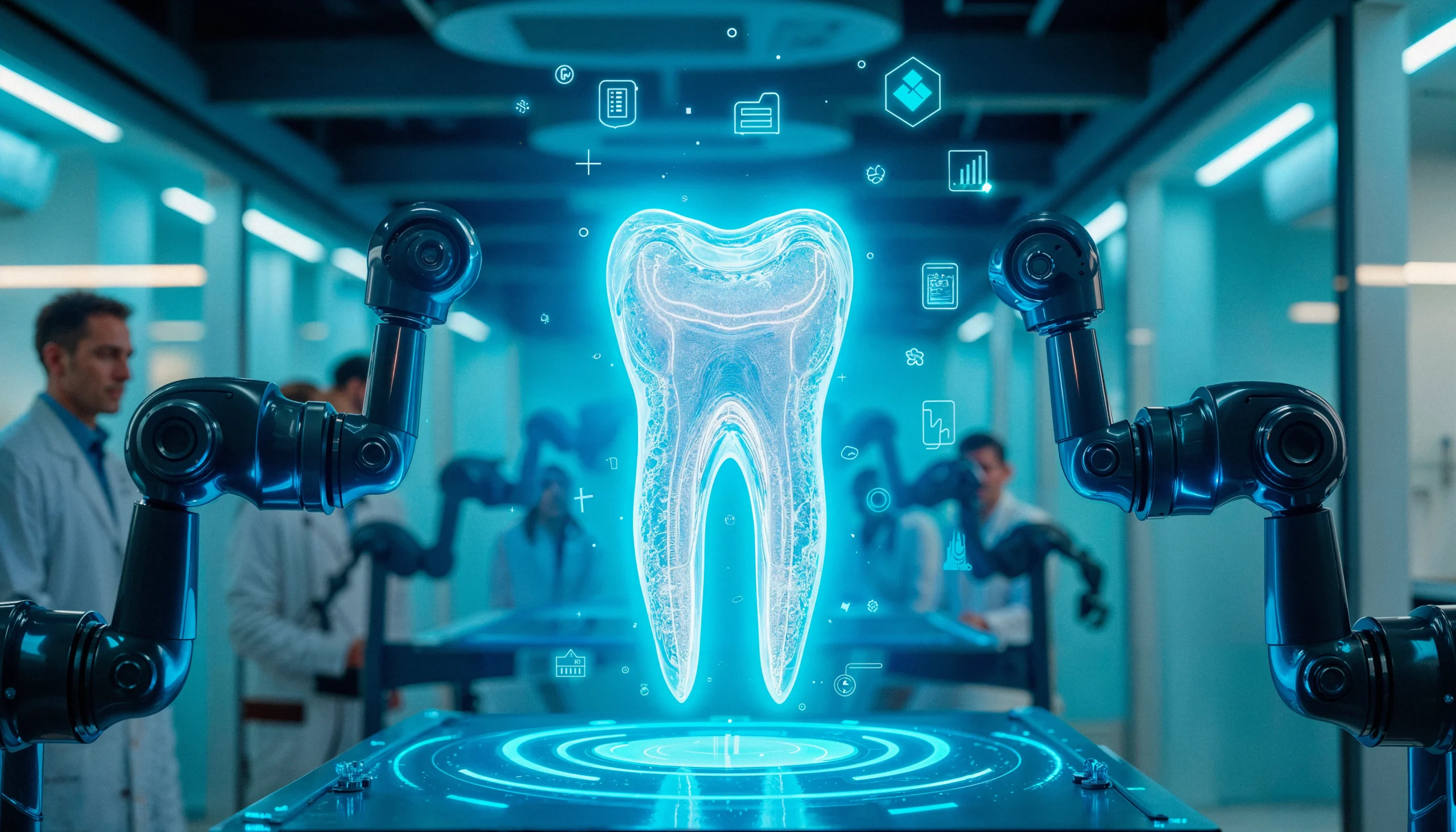
Dental care is entering a new digital intelligence era
Dental care is no longer limited to traditional examination methods and manual interpretation of X-rays. Modern clinics are rapidly shifting toward intelligent diagnostic systems that support faster and more accurate decision-making.
Nerovet AI Dentistry represents this shift toward AI-assisted oral healthcare, where technology supports dentists in identifying issues earlier, improving accuracy, and enhancing treatment planning.
This evolution is happening because dental practices now deal with:
- Higher patient loads
- Demand for faster diagnosis
- Need for early disease detection
- Growth of digital imaging systems
- Pressure for more precise treatment planning
AI is not replacing dentists—it is strengthening their clinical decision process.
Why dental clinics are adopting AI-based systems
Dental workflows are becoming more data-driven. Traditional methods alone are no longer enough for modern expectations.
Nerovet AI Dentistry fits into this transformation by improving efficiency and reducing diagnostic delays.
Key reasons for adoption:
- Faster interpretation of dental X-rays
- Early detection of hidden cavities
- Better analysis of bone loss patterns
- Reduced human error in diagnosis
- Improved second-opinion support
Clinics are now focusing on how AI can improve workflow rather than questioning whether it is necessary.
See also Jim McMahon’s Health: An In-Depth Look at the Former NFL Star’s Journey
AI-powered imaging and diagnostic accuracy
One of the strongest benefits of AI in dentistry is advanced imaging analysis.
Dental radiographs often contain subtle signs that are difficult to detect manually. AI helps highlight these areas instantly.
How it improves diagnostics:
- Detects early-stage decay
- Highlights abnormal bone structures
- Flags periodontal disease indicators
- Compares scans with large datasets
- Reduces fatigue-related oversight
Common use cases:
- Root canal evaluation
- Orthodontic planning
- Implant placement assessment
- Gum disease tracking
- Pediatric dental monitoring
The result is more confident and precise clinical decisions.
Standardization in dental decision-making
One major challenge in dentistry is variation between practitioners. Two dentists may interpret the same scan differently.
Nerovet AI Dentistry helps solve this by introducing standardization.
Benefits of consistency:
- Uniform diagnostic interpretation
- Reduced treatment variation
- Improved clinical reliability
- Data-backed decision support
Patient advantages:
- More predictable treatment outcomes
- Reduced unnecessary procedures
- Greater trust in diagnosis
- Better long-term dental health
Consistency improves both clinical efficiency and patient satisfaction.
Integration into modern dental workflows
AI systems are most effective when they integrate smoothly into existing clinic tools.
Nerovet AI Dentistry works alongside digital dental infrastructure rather than replacing it.
Common integration points:
- Digital X-ray machines
- Intraoral scanners
- Cloud-based patient records
- Dental practice software
- Treatment planning tools
Typical workflow:
- Patient undergoes digital imaging
- AI analyzes scans instantly
- Key findings are highlighted
- Dentist reviews AI insights
- Final treatment plan is created
This reduces workload and improves speed without reducing clinical control.
Global rise of AI in dentistry
AI-assisted dentistry is growing rapidly worldwide. Clinics are adopting it for efficiency and accuracy improvements.
Popular applications include:
- Cavity detection systems
- Gum disease risk scoring
- Implant planning tools
- Orthodontic prediction models
- Patient risk analysis systems
Main benefits driving popularity:
- Faster diagnosis
- Better treatment acceptance
- Reduced chair time
- Improved reporting accuracy
- Stronger patient communication
Patients also respond positively when visuals help them understand their condition.
Long-term patient tracking and predictive care
One of the most powerful advantages of AI dentistry is long-term monitoring.
Instead of viewing each visit separately, systems track patient history continuously.
What gets tracked:
- Bone density changes
- Gum disease progression
- Tooth alignment shifts
- Recurrent decay patterns
- Treatment outcomes
Benefits:
- Early detection of future problems
- Personalized treatment planning
- Strong preventive care strategy
- Lower long-term treatment costs
This transforms dentistry from reactive to preventive care.
Ethical use of AI in dentistry
AI in healthcare must be used responsibly. Dental professionals remain fully responsible for final decisions.
Important principles:
- AI supports, not replaces dentists
- Transparency in AI suggestions
- Secure patient data handling
- Compliance with privacy standards
- Avoid over-dependence on automation
Responsible AI usage ensures:
- Clear separation between suggestion and diagnosis
- Clinical audit tracking
- Reduced bias in data interpretation
- Continuous system validation
Ethical use is essential for trust and safety.
Better patient communication and understanding
AI improves how dentists communicate with patients.
Visual explanations make complex conditions easier to understand.
Patient benefits:
- Clear visualization of dental issues
- Better understanding of treatment needs
- Increased trust in recommendations
- Higher acceptance of procedures
- Improved awareness of oral health
This leads to stronger doctor-patient relationships.
Challenges in real-world adoption
Despite advantages, AI dentistry still faces some barriers.
Common challenges:
- High initial setup cost
- Staff training requirements
- Dependence on high-quality imaging
- Occasional false positives
- Resistance to new technology
However, these challenges are decreasing as systems become more advanced and user-friendly.
Future of AI in dentistry
The future of dental care will focus on prediction and prevention rather than treatment alone.
Expected advancements:
- Early cavity prediction before symptoms
- Automated preventive scheduling
- Real-time chairside AI support
- Orthodontic outcome simulation
- Integration with wearable oral health devices
Dentistry is moving toward a fully data-driven healthcare model.
Final perspective on Nerovet AI Dentistry
Modern dentistry is evolving into a smarter, faster, and more data-driven field. Nerovet AI Dentistry represents this transformation by improving diagnostic accuracy, standardizing decisions, and enhancing patient communication.
It does not replace dentists—it strengthens their capabilities.
The future of oral healthcare will depend on how effectively clinics combine human expertise with intelligent AI systems. Those who adopt this transformation early will lead the next generation of precision dentistry.