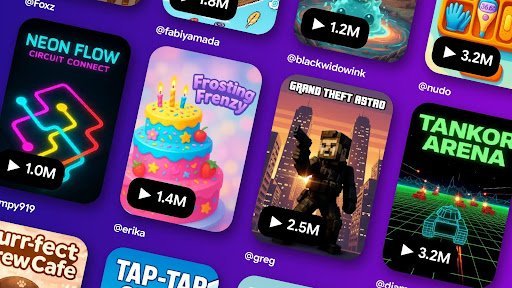
The number of Online Games available to players keeps growing because publishing is no longer limited to large studios with retail deals. Independent developers, students, hobbyists, small teams, and community creators can release projects through digital platforms with fewer technical barriers. This gives players more choice than ever, but it also means every new release has less time to earn attention before another wave arrives.
Why Online Free Games Can Reach Players So Quickly
Online Free Games can move from a creator’s computer to a public page without physical manufacturing, store delivery, or a traditional publishing contract. Itch.io allows creators to make a project page, upload files, set platform details, and publish HTML projects that can run directly in a browser. Roblox also provides tools for publishing experiences from its development software to the platform.
Casual games are especially suitable for this faster release environment. A creator can build one focused mechanic, publish an early version, and learn whether people understand it before producing a large amount of extra content.
This does not mean that development has become easy. Designing controls, testing devices, fixing errors, creating art, and supporting players still require real work. What has changed is the route to the audience. A small project no longer needs to wait for a space on a physical store shelf.
The First Day Now Matters More Than It Used To
When releases arrive constantly, a title can lose visibility before many players even notice it. The first thumbnail, description, opening screen, and few minutes of play carry more weight because people know that another option is always nearby.
Viral games may gain attention quickly, but creators still need to prepare for what happens after that first burst:
-
The page should explain the main activity clearly.
-
Controls should be easy to find.
-
Loading should not hide whether the experience is working.
-
The first challenge should demonstrate the central idea.
-
Screenshots should represent real play.
-
Progress should save in the way the page promises.
-
New players should know whether an account is required.
-
Bugs should have a clear reporting method.
-
Updates should fix problems without destroying saved progress.
-
The project should offer a reason to return after the first session.
A large launch campaign cannot protect a confusing opening forever. When choice is abundant, players can leave after one weak first impression and may never see the improvements that arrive later.
Players Have Become Faster at Testing New Ideas
A constant flow of releases changes how people judge them. Many players no longer approach every new title as a major commitment. They sample several possibilities and continue only with the ones that create interest quickly.
This can be useful. Players become more willing to test unusual themes, experimental controls, and small projects because the cost of trying them may be low. A person who would never purchase a full strategy release might still test a ten-minute browser experiment built around one clever system.
The danger is that fast testing can become unfair testing. Some experiences need time to reveal their value. A mystery may begin slowly. A strategy system may require several rounds before its choices become clear. A story-focused project may deliberately avoid immediate action.
Players can improve their decisions by asking what the experience is trying to achieve. Do not judge every title by the speed of an arcade challenge. Give each one enough time to demonstrate the kind of value it promises.
A Puzzle Board Built Around Careful Swaps
Cartoon Match Mania is a match-3 puzzle game where the player swaps cartoon-themed items to form matching combinations and clear levels. Every move changes the board, so a quick match may remove pieces needed for a stronger combination later. Players can improve their results by looking beyond the first available match, studying where new items may fall, and setting up larger groups. The colourful presentation makes the goal easy to understand, while limited moves or changing level targets add planning to the simple swapping action.
How a social gaming platform Decides What Gets Seen
A social gaming platform cannot display every new release equally. It needs systems that decide which projects appear on homepages, recommendation rows, search results, trending sections, and friend activity feeds.
Roblox explains that its recommendation system studies signals such as meaningful play sessions, repeated play days, playtime, intentional play with others, and how often people leave shortly after joining. The system can first test an experience with a group of users and then expand its reach when those users respond well.
This changes what creators compete for. Publishing is only the first step. They must also convince the platform that players are finding real value.
Common discovery signals may include:
-
Whether people open the page after seeing it
-
How quickly they leave
-
Whether they complete a meaningful session
-
Whether they return on another day
-
Whether they invite friends
-
Whether they follow the creator
-
Whether the experience receives positive feedback
-
Whether technical problems interrupt play
-
Whether updates improve or damage engagement
-
Whether the title suits the interests of the viewer
Recommendation systems can help a small project reach the right audience, but they can also make visibility feel unstable. A creator may see attention rise after an update and fall when player behaviour changes or newer releases begin competing for the same group.
Too Much Choice Can Make Discovery Harder
More releases should make it easier to find something enjoyable, but an enormous library can create a different problem. Players may spend more time comparing options than playing any of them.
Research into digital recommendations has found evidence that people can feel overloaded when too many related options are displayed. Another study argues that larger choice sets can make selection more difficult and increase the fear of choosing the wrong option. These findings are not limited to games, but they help explain why a crowded discovery page can feel tiring.
Players can reduce this pressure with a simple discovery limit. Choose three promising options, spend a fixed amount of time testing each one, and then decide whether any deserves a longer session.
Useful filters include:
Session length
Solo or multiplayer
Control type
Device support
Difficulty
Genre
Save system
Private-room support
Recent updates
Creator history
The goal is not to identify the perfect option from thousands of releases. It is to find one that fits what you want to do right now.
Daily Releases Create More Small and Specific Genres
A large studio often needs a broad audience to support a major budget. A small creator can build for a narrow interest. This allows highly specific combinations to appear.
Instead of making a general racing title, a creator might focus on parking under pressure. Instead of a broad RPG, another might create a short role-playing story about running a small shop. A puzzle could be built entirely around sound, shadows, or one unusual movement rule.
Frequent publishing makes these small ideas easier to test. Some will disappear quickly. Others will find a loyal audience that larger companies may have ignored.
This is important because innovation does not always arrive as a huge new genre. It can begin as a tiny change to one familiar rule. When many creators can release experiments, players gain access to more possible answers to the question, “What else could this kind of game be?”
AI games Increase Both Speed and Competition
AI games and AI-assisted development tools can help creators brainstorm ideas, draft temporary dialogue, test code, produce early visual concepts, or generate variations for review. These tools may shorten certain parts of development, allowing small teams to test more possibilities.
However, faster production can also create more low-quality releases. A platform may receive many projects built from similar generated assets, repeated descriptions, copied structures, or unfinished systems.
Players should therefore judge the finished experience rather than the production method. Ask whether the controls feel intentional, whether the visual elements fit together, whether the rules remain consistent, and whether the creator has tested the result.
Creators should use speed to improve quality, not simply to increase output. Producing ten weak projects does not automatically create more value than carefully developing one strong idea.
As publishing becomes faster, human judgement becomes more important. Someone still needs to decide what belongs, what should be removed, what feels fair, and what gives the experience a clear identity.
Reviews Have Less Time to Catch Up
When releases arrive quickly, early reviews can shape a title before it is fully understood. The first players may report serious technical problems, but they may also misunderstand unusual controls or judge an unfinished version as though it were final.
At the same time, waiting too long for reviews can mean missing the short period when a project is receiving attention.
Players should read early feedback carefully. Look for repeated patterns rather than one angry comment or one perfect score. Separate technical complaints from personal taste. A report that progress does not save is more useful than a statement saying the experience is “boring” with no explanation.
Creators should make version status clear. Labels such as prototype, early access, beta, demo, and complete release create different expectations. Update notes should explain what changed and whether older saves still work.
Roblox provides creator analytics for studying growth, technical performance, player behaviour, and retention. This kind of information allows developers to compare written feedback with what people actually do after joining.
A creator may discover that players praise a feature in comments but rarely use it. Another feature may receive little discussion while keeping people active for much longer.
Constant Releases Make Preservation More Important
A crowded market does not only create new opportunities. It can also cause interesting projects to disappear. A creator may stop paying for a server, remove an unfinished page, lose access to old files, or leave development entirely.
Browser experiences can be especially dependent on the original page and its supporting services. When that page closes, the project may become difficult or impossible to access.
Creators can protect their work by keeping organised backups, documenting important systems, clearly licensing reusable materials, and preserving playable offline versions when practical. Players can support preservation by following creators, saving project pages, writing useful reviews, and respecting official archive or download options.
Not every release will remain active forever. However, small experimental games can still influence future creators even when their original audiences were limited. Losing them means losing part of the history showing how ideas developed.
The daily flow of new releases has changed the relationship between players, creators, and platforms. Players have more choice but less time for each option. Creators can publish more easily but must work harder to earn visibility and trust. Platforms have become powerful curators because their recommendations help decide which projects receive a meaningful chance.
An Online game No Download makes this environment move even faster. A creator can publish a focused idea, share it through a page, and watch real players respond without asking them to install a large file first. That speed can produce noise, but it can also give original ideas a chance to reach people before a traditional publisher would ever consider them.