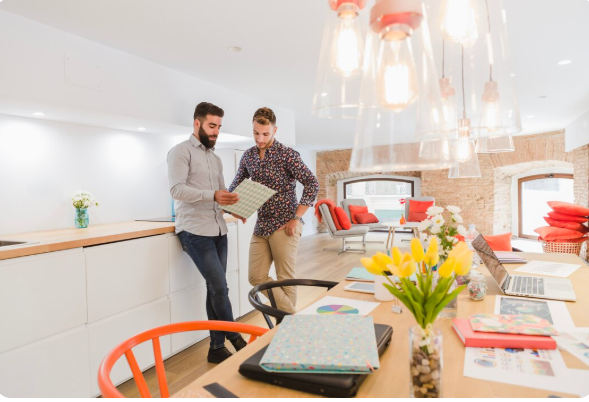
A well-designed home should do more than look attractive. It should support your routines, make everyday tasks easier, and create an atmosphere that feels comfortable and personal. The most effective interiors achieve this balance through thoughtful layouts, practical storage, purposeful lighting, durable materials, and carefully chosen details.
Current interior design is moving away from spaces that feel overly staged or built around short-lived trends. Instead, the focus is on warm, adaptable rooms with natural textures, richer colors, and furnishings that reflect the people who live there. Whether you are renovating an entire property or refreshing one room at a time, the following interior design ideas can help you create a more functional and visually cohesive home.
Start With How the Space Will Be Used
Before selecting colors or buying furniture, consider what each room needs to accomplish. A living room may be used for conversation, entertainment, reading, remote work, or children’s activities. Designing around these real functions produces better results than copying a finished room without considering how it fits your lifestyle.
Make a simple list of the activities that take place in each space and identify what currently causes frustration. Common problems include insufficient storage, poor lighting, blocked walkways, oversized furniture, and a lack of accessible surfaces.
Once the room’s purpose is clear, divide it into practical zones. A rug can define a seating area, a narrow console can create an entry point, and a comfortable chair with a floor lamp can turn an unused corner into a reading space. This approach improves functionality without requiring permanent partitions.
Choose Warm Minimalism Instead of Empty Minimalism
Minimalism remains useful, but it no longer has to mean bare white rooms and almost no decoration. Warm minimalism combines visual simplicity with texture, comfort, and character. The goal is to reduce unnecessary clutter while keeping the space welcoming.
Use a limited palette of warm neutrals, soft earth tones, and natural finishes as the foundation. Cream, clay, sand, taupe, muted olive, and warm brown can create a calmer atmosphere than cold gray applied throughout the home. Contrast can then be introduced through dark wood, aged metal, artwork, or a carefully chosen accent color.
Rather than filling every surface, leave some areas open so individual objects have room to stand out. A handmade vase, framed photograph, sculptural lamp, or stack of favorite books can add more personality than a large collection of unrelated accessories.
Make Storage Part of the Design
Effective storage should support the room without dominating it. Built-in cabinetry, fitted shelving, storage benches, and beds with drawers help keep everyday belongings accessible while maintaining a clean appearance.
Closed storage works best for items that create visual clutter, such as cables, paperwork, toys, cleaning supplies, and small electronics. Open shelves are better reserved for books, plants, ceramics, and objects that contribute to the room’s design.
Multi-functional furniture can be particularly valuable in apartments and smaller homes. Consider ottomans with internal storage, nesting tables, extendable dining tables, wall-mounted desks, or modular seating that can be rearranged. Before purchasing a convertible piece, check that it performs each function comfortably. Furniture that technically serves several purposes but is difficult to use often becomes an inconvenience.
Bring Nature Indoors With a Broader Biophilic Approach
Biophilic design involves more than adding houseplants. It creates a stronger connection with nature through daylight, views, airflow, organic forms, natural materials, and colors commonly found outdoors.
Keep window areas as open as privacy allows and use layered treatments, such as sheer curtains with heavier drapes, to control light throughout the day. Mirrors placed near—not directly opposite—windows can help distribute daylight without producing uncomfortable glare.
Wood, cork, stone, linen, wool, clay, and woven fibers bring warmth and tactile variety into a room. These materials do not need to cover every surface. A wooden side table, stone lamp base, linen curtain, or woven basket can introduce natural texture without requiring a major renovation.
Choose indoor plants according to the room’s actual light and humidity conditions. Low-maintenance varieties can still struggle when placed in unsuitable environments. If live plants are impractical, botanical artwork, natural finishes, and views of outdoor greenery can support a similar visual connection.
Use Color With Confidence and Restraint
Color is returning to interiors in a more considered way. Warm greens, mineral blues, earthy reds, deep browns, ochre, burgundy, and muted terracotta can add depth without making a room feel chaotic.
A statement wall remains an option, but color can also be introduced through cabinetry, ceilings, doors, rugs, curtains, or upholstered furniture. Painting a ceiling in a soft complementary shade can make a tall room feel more intimate, while using one color across walls and trim can create a seamless, architectural effect.
Always test paint with large samples in the actual room. Observe the color in natural daylight, artificial light, and shaded conditions before committing. Small paint chips rarely show how a shade will behave across an entire wall.
For a cohesive home, repeat selected colors in different proportions. A living room’s main wall color might reappear as a small accent in the hallway or bedroom. This creates continuity without making every room identical.
Build a Layered Lighting Plan
A single ceiling fixture rarely provides enough flexibility for an entire room. A successful lighting plan combines three layers:
Ambient Lighting
Ambient lighting provides general illumination through ceiling fixtures, pendants, recessed lights, or wall-mounted fittings. It should make the room easy to navigate without creating harsh brightness.
Task Lighting
Task lighting supports specific activities. Examples include under-cabinet lights in a kitchen, bedside reading lamps, desk lamps, and focused lighting near mirrors or work surfaces.
Accent Lighting
Accent lighting adds depth and draws attention to artwork, shelving, textured walls, or architectural details. Picture lights, wall washers, and small directional fixtures can make a room feel more intentional.
LED bulbs provide efficient, long-lasting illumination, but brightness is not the only consideration. Pay attention to color temperature, dimming compatibility, and color rendering. Warm light generally suits living rooms and bedrooms, while slightly clearer light can work well in kitchens, bathrooms, and work areas.
Whenever possible, place lighting layers on separate switches. This makes it easier to change the room’s atmosphere and avoid using full overhead lighting when softer illumination is sufficient.
Create Flexible Rooms Without Removing Every Wall
Open-plan living can feel bright and spacious, but completely open layouts are not suitable for every household. Noise, cooking odors, privacy, heating, and concentration can all become more difficult to manage.
Instead of automatically removing walls, consider flexible ways to connect or separate spaces. Sliding doors, glazed partitions, curtains, folding screens, shelving units, and furniture arrangements can define zones while maintaining light and visual continuity.
Maintain comfortable pathways between major pieces of furniture. Doors, drawers, and cabinets should be able to open fully, and people should not need to move around obstacles to cross the room. Measuring the available space before purchasing furniture can prevent many common layout problems.
In a multi-purpose room, use furniture to communicate function. A rug can anchor the relaxation zone, while a compact desk and focused lamp can establish a workspace. Storage nearby makes it easier to reset the room when an activity ends.
Add Texture and Improve Acoustic Comfort
Texture gives a room depth, but it also affects how the space sounds and feels. Homes with hard flooring, large windows, high ceilings, and minimal furniture can produce echoes that make conversation or relaxation less comfortable.
Rugs, curtains, upholstered furniture, fabric shades, cushions, books, and acoustic panels can soften sound while enriching the design. The most balanced interiors combine smooth and textured surfaces rather than relying heavily on one finish.
Try pairing matte walls with glazed ceramics, woven textiles with polished metal, or soft upholstery with visible wood grain. Contrast makes individual materials easier to appreciate. Keep the color palette connected so the variety feels layered rather than random.
Make Sustainable Choices That Last
Sustainable interior design begins with using fewer resources, not simply replacing everything with products marketed as eco-friendly. Retaining existing cabinetry, refinishing solid furniture, repairing upholstery, and buying vintage pieces can reduce waste while adding character.
When new materials are necessary, consider durability, repairability, responsible sourcing, and expected lifespan. Timeless shapes and replaceable components can help furniture remain useful even when decorating preferences change.
For paints, adhesives, sealants, flooring, and composite wood products, look for clearly documented low-emission options. Product labels should be reviewed carefully because environmental claims can vary in meaning. Ventilate rooms during painting, installation, and curing, and follow the manufacturer’s handling instructions.
Reclaimed wood, recycled metal, responsibly sourced timber, and salvaged architectural elements can work well when their condition and intended use have been properly assessed. Avoid using reclaimed materials in applications where moisture, structural strength, fire performance, or contamination may create a safety concern.
Integrate Smart Technology Without Letting It Take Over
Smart-home features are most useful when they solve a clear problem. Programmable thermostats, occupancy sensors, leak detectors, motorized shades, and adjustable lighting can improve convenience and help manage energy use.
Choose systems that include simple manual controls so essential features remain usable without an app. Before investing in several connected products, confirm that they can work together and that replacement parts or support are likely to remain available.
Technology should blend into the room wherever practical. Concealed cable routes, charging drawers, recessed outlets, and media cabinets with adequate ventilation can reduce visual clutter. Privacy settings and software support should also be considered before installing cameras, microphones, or internet-connected devices inside the home.
Focus Renovation Spending Where It Matters Most
A successful renovation does not always require changing every surface. Targeted upgrades can make a substantial difference when they address visible wear, poor function, or inconsistent finishes.
High-impact improvements may include:
- Repainting walls and trim
- Replacing outdated or damaged lighting
- Updating cabinet handles and door hardware
- Adding practical kitchen storage
- Improving window treatments
- Replacing worn flooring
- Refreshing bathroom fixtures
- Installing better task lighting
- Repairing damaged woodwork
- Improving ventilation where needed
Plan the order of work before purchasing finishes. Electrical, plumbing, structural, and ventilation changes should generally be resolved before painting, flooring, cabinetry, and decorative installation. This reduces the risk of damaging completed work.
For projects involving large furniture orders, construction materials, or equipment that cannot be handled by standard parcel services, transportation should be arranged early. Contractors, project managers, and freight carriers may use a freight load board such as https://www.shiply.com/us/load-board to review available transport requirements and coordinate suitable capacity. Accurate dimensions, weights, access details, and delivery conditions are essential when planning heavy or oversized shipments.
Personalize the Space With Meaningful Details
A home feels complete when it includes objects that have genuine meaning. Artwork, travel finds, inherited furniture, family photographs, books, and handmade items can prevent a newly decorated room from looking like a showroom.
Select statement pieces according to scale. A small artwork may feel lost above a wide sofa, while too many large objects can make a compact room feel crowded. Grouping smaller pieces can create greater impact and make the arrangement feel deliberate.
Vintage and modern pieces can coexist when they share a common element such as color, material, proportion, or shape. This approach creates a collected interior that can evolve naturally rather than being replaced whenever a trend changes.
Refresh Each Room With Simple, Practical Changes
Living Room
Improve the seating arrangement so people can communicate comfortably, then use a rug to visually connect the main furniture. Add multiple light sources and keep side tables within easy reach of seats.
Bedroom
Prioritize restful colors, effective window coverings, bedside lighting, and storage that reduces visible clutter. Soft textiles and an upholstered or wooden headboard can create a more comfortable focal point.
Kitchen
Focus on workflow before appearance. Frequently used tools should be easy to reach, while less-used appliances can be stored away. Under-cabinet lighting, durable surfaces, and organized drawers can improve the room without a complete remodel.
Bathroom
Better lighting, updated mirrors, wall-mounted storage, and coordinated hardware can noticeably refresh a bathroom. Materials and fixtures should be suitable for moisture and easy to clean.
Home Office
Position the desk to benefit from natural light without creating screen glare. Use adjustable task lighting, accessible power outlets, cable management, and closed storage for paperwork. A defined background can also make video calls appear more professional.
Avoid Common Interior Design Mistakes
One of the most common mistakes is buying furniture before measuring the room. Record wall lengths, ceiling height, door swings, window positions, electrical outlets, and major pathways before making large purchases.
Other problems include relying on one light source, choosing rugs that are too small, hanging curtains too low, matching every furniture item, and placing decoration on every available surface. Rooms usually feel more balanced when they include a combination of open space, functional objects, and carefully selected decorative elements.
It is also important to consider maintenance. Highly textured surfaces, delicate materials, and complicated fixtures may look attractive but can become frustrating in busy households. Choose finishes according to pets, children, sunlight, humidity, cleaning routines, and everyday wear.
Conclusion
Fresh interior design ideas are most effective when they improve both the appearance and performance of a home. Warm color palettes, natural materials, layered lighting, flexible layouts, intelligent storage, and meaningful objects can create rooms that feel current without becoming dependent on temporary trends.
Start with the way each space is used, solve practical problems first, and introduce decorative changes gradually. Small improvements can be evaluated before committing to larger renovations, helping you build a home that feels cohesive and genuinely personal.
For additional ideas, materials, and manageable project options, exploring practical home improvement approaches can help you identify upgrades that suit your space, priorities, and budget. The strongest interiors are not merely fashionable; they are comfortable, durable, adaptable, and designed around real life.