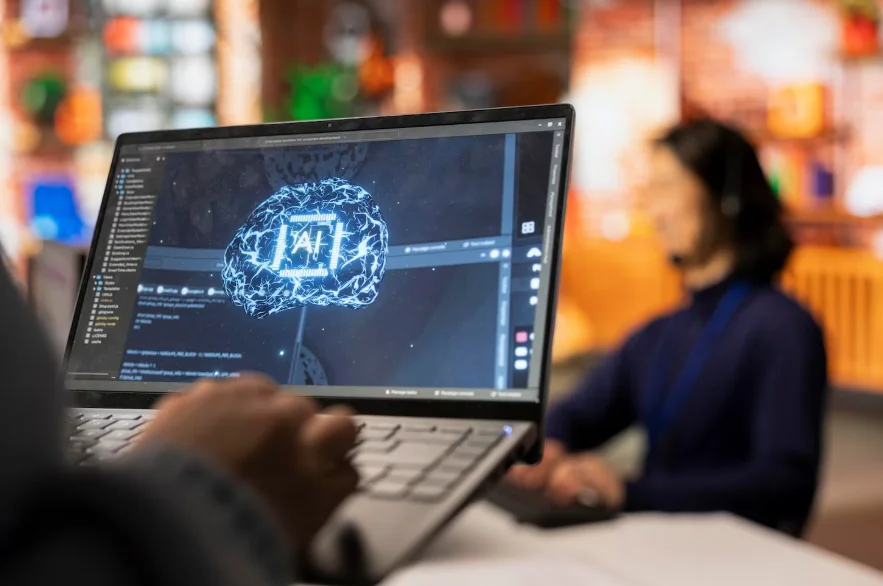
Introduction: A New Era of Intelligent Work
Artificial intelligence is transforming how work gets done across industries. What began as a tool for data processing has evolved into a dynamic force that reshapes productivity, decision-making, and operational structure. Businesses today are no longer asking whether to adopt AI, but how to integrate it effectively into daily workflows. The impact is visible in faster processes, smarter resource allocation, and more adaptive work environments.
This transformation is not limited to large enterprises. Small businesses, freelancers, and remote teams are increasingly using intelligent tools to streamline tasks that once required significant time and effort. As AI continues to develop, productivity is becoming less about working harder and more about working with greater precision and efficiency.
Automation and the Redefinition of Routine Tasks
One of the most immediate impacts of AI is the automation of repetitive work. Tasks that once consumed hours of manual effort are now completed in seconds. Administrative processes, scheduling coordination, and data organization are increasingly handled through intelligent systems that operate continuously without fatigue.
Automation does not eliminate human involvement but shifts the focus toward higher-value activities. Employees spend less time managing routine processes and more time solving problems, developing ideas, and engaging in strategic thinking. This transition supports both efficiency and creativity, allowing organizations to use human expertise where it matters most.
The growing reliance on automated workflows has also improved accuracy. Intelligent systems reduce the likelihood of human error in data handling, documentation, and operational tracking. This improvement strengthens reliability and supports better decision-making across departments.
AI-Driven Decision-Making in Modern Organizations
AI is reshaping how decisions are made by providing real-time insights derived from large volumes of information. Instead of relying on delayed reports or assumptions, businesses now analyze patterns and trends as they emerge. This capability enables faster responses to market changes and operational challenges.
Predictive analysis has become a defining feature of modern productivity. Organizations can anticipate customer behavior, identify operational bottlenecks, and evaluate performance trends before issues escalate. This proactive approach allows businesses to adjust strategies quickly and maintain stability in dynamic environments.
The integration of intelligent analysis into everyday workflows also supports more informed planning. Leaders gain clearer visibility into performance metrics, allowing them to allocate resources more effectively and prioritize initiatives that produce measurable results.
Enhancing Collaboration Through Intelligent Systems
Collaboration has evolved significantly with the integration of AI into communication and project management environments. Intelligent systems assist teams by organizing information, prioritizing tasks, and providing contextual recommendations that support decision-making.
Remote and hybrid work structures have particularly benefited from AI-enhanced collaboration. Teams operating across different locations can coordinate efficiently through systems that synchronize updates, track progress, and manage shared resources in real time. This level of coordination reduces friction and improves overall workflow continuity.
Digital environments are also becoming more responsive to user needs. Intelligent tools adapt to behavior patterns, streamline communication processes, and support smoother interaction across departments. The result is a work environment that responds dynamically to changing priorities.
AI and the Evolution of Content and Media Workflows
Creative industries are experiencing significant changes in how content is produced and distributed. AI supports editing processes, organizes large media libraries, and accelerates content preparation. This capability allows creators to focus more on storytelling and conceptual development rather than technical execution.
Media management environments are becoming increasingly structured through intelligent categorization and recommendation systems. Services such as Voddler reflect how digital media ecosystems are evolving toward more efficient organization and distribution of content. This evolution supports productivity by simplifying access to information and reducing the time required to manage complex digital assets.
The influence of AI on creative workflows demonstrates that productivity gains are not limited to technical or administrative fields. Innovation and creativity are also benefiting from faster, more adaptive processes.
Intelligent Workflow Optimization
AI does not only perform tasks; it also improves how tasks are organized. Workflow optimization has become a central advantage of intelligent systems. By analyzing operational patterns, AI identifies inefficiencies and recommends adjustments that improve performance.
Dynamic workflow management allows businesses to adapt processes based on real-time conditions. Tasks can be prioritized automatically, resources can be allocated more effectively, and potential delays can be addressed before they disrupt operations. This responsiveness supports smoother execution and greater consistency.
Structured knowledge environments such as The Expo Tab illustrate how organized information ecosystems contribute to productivity. When information is accessible and well-structured, teams operate with greater clarity and reduced confusion, which enhances efficiency across all levels of operation.
The Human-AI Partnership in the Workplace
A common concern about AI is the potential replacement of human roles. However, current developments indicate a shift toward collaboration rather than substitution. AI enhances human capability by supporting analysis, reducing workload, and providing actionable insight.
Employees are increasingly working alongside intelligent systems that assist with research, planning, and operational monitoring. This partnership allows individuals to focus on judgment, creativity, and strategic direction while AI handles data-intensive processes.
Skill requirements are evolving as a result of this transformation. Professionals are expected to understand how to interact with intelligent tools, interpret automated insights, and adapt workflows based on digital feedback. The modern workforce is becoming more analytical and technology-aware.
Productivity Gains Across Industries
The impact of AI extends across diverse sectors, including healthcare, finance, manufacturing, education, and digital services. Each industry experiences productivity improvements through tailored applications of intelligent technology.
In operational environments, AI supports predictive maintenance and resource optimization. In service-oriented sectors, it enhances customer interaction and response efficiency. In knowledge-based industries, it accelerates research and information processing.
These widespread applications demonstrate that AI-driven productivity is not confined to specific fields but represents a broad transformation in how work is structured and executed.
Challenges and Considerations in AI Adoption
While AI offers significant productivity advantages, its integration requires thoughtful implementation. Organizations must ensure that systems are aligned with operational goals and ethical considerations. Transparency in automated processes and responsible data management are essential for maintaining trust.
Another important consideration is change management. Employees must be supported through training and adaptation as workflows evolve. Successful implementation depends not only on technology but also on organizational readiness and cultural acceptance.
Balancing automation with human oversight ensures that productivity gains do not come at the expense of accountability or clarity.
The Future of Work in an AI-Driven Environment
The trajectory of AI development suggests continued transformation of productivity and workflows. Intelligent systems will become more adaptive, more integrated, and more responsive to human needs. Work environments will increasingly operate as interconnected ecosystems where information flows seamlessly and decisions are supported by continuous analysis.
Future productivity will depend on the ability to combine human insight with intelligent automation. Organizations that embrace this balance will achieve greater efficiency while maintaining creativity and innovation.
As AI continues to evolve, the concept of work itself is shifting from task execution toward strategic contribution. Productivity is no longer defined by time spent but by value created.
Conclusion: A Transformation That Continues to Evolve
Artificial intelligence is reshaping productivity by redefining how work is performed, organized, and evaluated. Automation of routine tasks, enhanced decision-making, intelligent collaboration, and optimized workflows are creating more efficient and adaptive environments across industries.
The integration of AI into daily operations represents a long-term transformation rather than a temporary trend. Businesses and professionals who understand this shift and adapt thoughtfully will benefit from improved efficiency, stronger decision-making, and more sustainable growth.
The future of productivity lies in the collaboration between human capability and intelligent technology. As workflows continue to evolve, AI will remain a central force shaping how work is performed and how success is achieved.