The backpack used to be the quintessential symbol of American education, heavy with textbooks and binders. Today, it’s increasingly being replaced by tablets, laptops, and smartphones – not just for communication, but for the very fabric of learning and completing assignments. Digital homework platforms are no longer a novelty; they are fundamentally reshaping how students learn, how teachers instruct, and how the entire American education landscape operates. This shift, accelerated by recent global events, presents both unprecedented opportunities and unique challenges that demand our attention.
The Rise of the Digital Classroom: Beyond the Pandemic Pivot
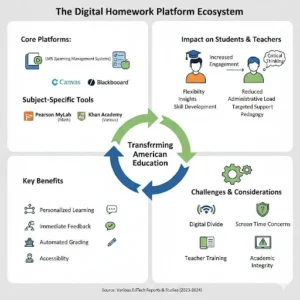
While the COVID-19 pandemic undoubtedly forced a rapid transition to online learning, the groundwork for digital homework platforms had been laid years prior. Innovations in educational technology (EdTech) were already offering sophisticated tools for assignment creation, submission, grading, and feedback. These platforms range from comprehensive Learning Management Systems (LMS) like Canvas and Blackboard, adopted by countless universities and school districts, to specialized applications focusing on specific subjects like mathematics (e.g., Pearson MyLab, Khan Academy) or writing (e.g., Turnitin, Grammarly).
This evolution isn’t just about convenience; it’s about efficacy. Digital platforms offer personalized learning paths, immediate feedback mechanisms, and a wealth of multimedia resources that static textbooks simply cannot match. For students juggling demanding schedules, whether due to part-time jobs, extracurriculars, or family responsibilities, these platforms offer flexibility. The ability to access assignments, lectures, and resources anytime, anywhere has become indispensable. When deadlines loom and complex subjects prove particularly challenging, many students find themselves seeking external support. This is where services that help with specific tasks become invaluable, offering a crucial lifeline for those asking, “Can someone do my homework for me?”
Data-Driven Insights: Personalization at Scale
One of the most significant advantages of digital homework platforms is their capacity for data collection and analysis. Every click, every answer, every minute spent on a particular topic can provide valuable insights. This data allows teachers to:
- Identify Learning Gaps: Platforms can pinpoint areas where a student or an entire class is struggling, allowing for targeted intervention.
- Personalize Learning: Adaptive learning algorithms can adjust the difficulty and type of questions presented based on a student’s performance, creating a truly individualized learning experience. A study by the Bill & Melinda Gates Foundation highlighted that personalized learning approaches can lead to significant gains in student achievement, with digital platforms being a key enabler (Gates Foundation, 2014).
- Automate Grading: For objective assignments, automated grading frees up teachers’ time, allowing them to focus on more complex tasks like one-on-one student support or curriculum development.
However, this data also raises important questions about privacy and the ethical use of student information, topics that educators and policymakers continue to grapple with.
Bridging the Gap: Accessibility and Equity
Digital platforms have the potential to democratize education by making learning resources more accessible. Students in rural areas or those with disabilities can access the same high-quality materials and instruction as their urban counterparts. Features like text-to-speech, closed captions, and adjustable font sizes are often built into these platforms, promoting inclusivity.
However, the “digital divide” remains a significant challenge. Not all students have reliable internet access or personal devices, creating an equity gap that can exacerbate existing educational disparities. According to a 2021 Pew Research Center study, 17% of teenagers say they often or sometimes cannot complete homework assignments because they do not have reliable internet access (Pew Research Center, 2021). Addressing this requires concerted efforts from schools, communities, and government to ensure equitable access to technology.
The Role of Supplemental Support in a Digital Age
As digital platforms become more sophisticated, so too does the need for students to navigate them effectively. The sheer volume of information and the complexity of some assignments can still be overwhelming. This is where the ecosystem of educational support services plays a vital role. Whether it’s understanding a complex algorithm taught via an online module or drafting a compelling essay for a digital submission, students often seek additional guidance. Many find immense value in connecting with an experienced online assignment helper who can provide clarity, feedback, and help them master challenging concepts or complete projects to a high standard.
Challenges and the Path Forward
Despite their transformative potential, digital homework platforms face hurdles:
- Teacher Training: Educators need ongoing professional development to effectively integrate these tools into their pedagogy.
- Screen Time Concerns: Balancing digital learning with concerns about excessive screen time and its impact on student well-being is crucial.
- Maintaining Engagement: Ensuring students remain engaged and motivated in a digital environment requires innovative instructional design.
- Academic Integrity: While platforms like Turnitin help deter plagiarism, the digital environment also presents new avenues for academic misconduct, requiring continuous vigilance and educational efforts.
The American education landscape is in a constant state of flux, driven significantly by the advancements in digital homework platforms. The future will likely see even more immersive, AI-powered learning experiences. The goal remains the same: to foster critical thinking, creativity, and knowledge acquisition, leveraging technology to empower every student to reach their full potential.
Key Takeaways
- Digital homework platforms are fundamentally reshaping American education by offering flexibility, personalized learning, and data-driven insights.
- They provide immediate feedback and can automate grading, freeing up teachers for more complex instructional tasks.
- While promoting accessibility, these platforms also highlight the “digital divide,” necessitating efforts to ensure equitable access to technology.
- Supplemental academic support, like online assignment helpers, remains crucial for students navigating complex assignments and deadlines in this evolving digital landscape.
- Challenges include teacher training, managing screen time, ensuring student engagement, and maintaining academic integrity.
Frequently Asked Questions (FAQs)
Q1: What are the main types of digital homework platforms?
A1: They generally fall into two categories: comprehensive Learning Management Systems (LMS) like Canvas and Blackboard used for overall course management, and subject-specific tools like Pearson MyLab or Khan Academy that focus on particular academic disciplines.
Q2: How do digital platforms personalize learning?
A2: Many platforms use adaptive learning algorithms that adjust the content and difficulty of assignments based on a student’s individual performance, providing targeted practice and resources where they are most needed.
Q3: What is the “digital divide” in the context of these platforms?
A3: The “digital divide” refers to the gap between those who have reliable access to the internet and digital devices, and those who do not. This can hinder some students from fully participating in or benefiting from digital learning opportunities.
Q4: Do digital homework platforms help with academic integrity?
A4: While some platforms integrate tools like plagiarism checkers (e.g., Turnitin), the digital environment can also present new challenges. Schools and platforms continuously work on strategies to promote ethical behavior and detect misconduct.
Q5: Are digital homework platforms replacing traditional teachers?
A5: No, digital platforms are tools designed to enhance teaching and learning, not replace teachers. They aim to automate administrative tasks, provide rich resources, and offer data insights, allowing teachers to focus more on mentorship, personalized instruction, and critical thinking development.
References:
- Gates Foundation. (2014). Early Progress: Interim Research on Personalized Learning. Retrieved from https://k12.gatesfoundation.org/resource/early-progress-interim-research-on-personalized-learning/ (Note: Link may be outdated, referencing foundational research.)
- Pew Research Center. (2021). Parenting in the Pandemic: Teens’ online learning experiences, challenges with remote instruction. Retrieved from https://www.pewresearch.org/social-trends/2021/09/15/parenting-in-the-pandemic-teens-online-learning-experiences-challenges-with-remote-instruction/
Author Bio
Dr. Eleanor Vance is a seasoned educational technology specialist and a senior content writer at MyAssignmentHelp.com. With a Ph.D. in Educational Leadership from a leading US university, Dr. Vance has dedicated over 15 years to understanding the intersection of pedagogy and digital innovation. Her work focuses on strategies for effective online learning, student success, and empowering educators to leverage technology for optimal outcomes in the evolving American education landscape.